How Can Organizations Reduce Payroll Errors and Save Time?
Building Accurate, Compliant, and Time-Efficient Payroll Processes

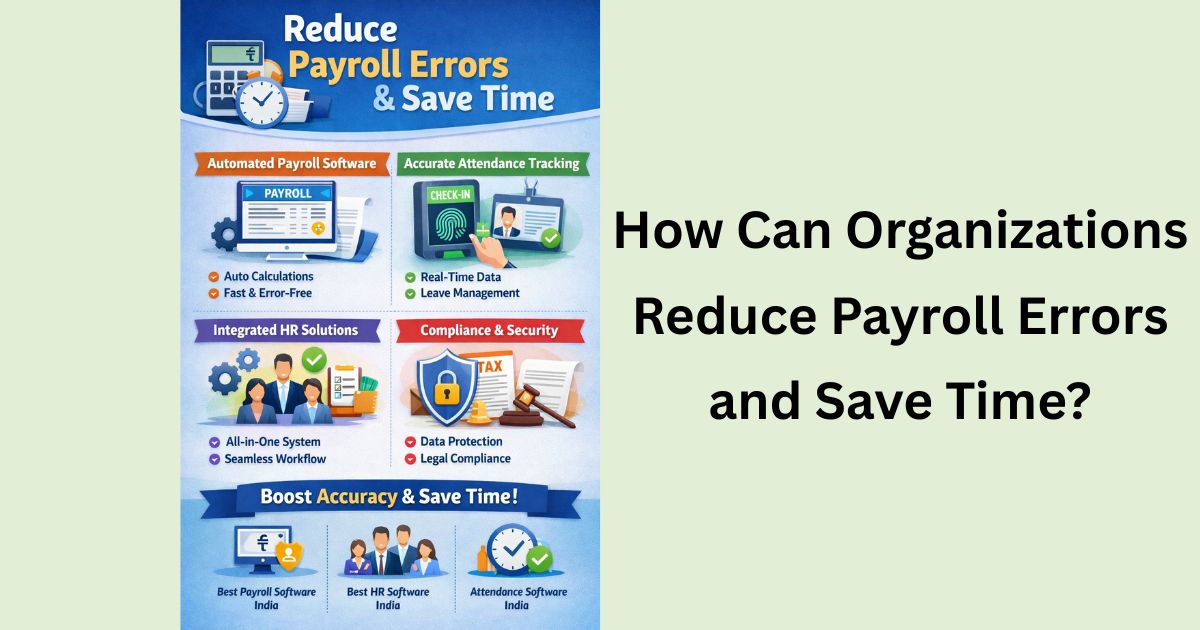
Payroll errors are more than just minor mistakes. They can lead to employee dissatisfaction, compliance issues, financial losses, and wasted hours fixing problems that should not have happened in the first place. In India, where payroll rules involve complex tax laws, statutory deductions, and frequent policy updates, managing payroll manually can quickly become overwhelming. Many organizations now look toward smarter systems, including the Best Payroll Software India, to reduce errors and save valuable time within their HR and finance teams.
This article explores the key causes of payroll errors and explains practical ways organizations can simplify payroll processing, improve accuracy, and focus more on strategic work rather than repetitive corrections.
Common Causes of Payroll Errors
Before understanding how to reduce payroll mistakes, it is important to know why they happen in the first place.
Manual Data Entry Issues
Manual payroll processing often involves entering employee details, salary components, deductions, and attendance data by hand. Even a small typing error can lead to incorrect salary calculations.
Inaccurate Attendance and Leave Records
When attendance, overtime, and leave data are not updated correctly, payroll calculations become unreliable. This is especially common in organizations using disconnected or outdated attendance systems.
Changing Compliance Requirements
Payroll in India must follow rules related to PF, ESI, professional tax, income tax, and labor laws. Missing updates or applying incorrect rules can result in penalties and rework.
Lack of Standard Processes
Without standardized payroll workflows, organizations depend too much on individuals. This increases dependency risk and leads to inconsistency when staff members change.
The Impact of Payroll Errors on Organizations
Payroll errors affect more than just numbers on a payslip.
Loss of Employee Trust
Employees expect accurate and timely salaries. Repeated errors reduce trust and harm morale, especially when deductions or reimbursements are wrong.
Increased Administrative Burden
Correcting payroll mistakes takes extra hours every month. HR and finance teams end up spending time fixing issues instead of focusing on employee engagement or planning.
Compliance and Legal Risks
Incorrect statutory calculations or delayed filings can attract fines and legal notices. Over time, this can damage an organization’s reputation.
How Automation Helps Reduce Payroll Errors
Automation is one of the most effective ways to minimize payroll errors while saving time.
Centralized Employee Data
Automated systems store employee information in a single platform. This reduces duplication and ensures consistency across payroll, attendance, and compliance records.
Automated Calculations
Payroll software applies predefined rules for salary structures, deductions, taxes, and benefits. This reduces human dependency and improves calculation accuracy.
Real-Time Updates
Modern payroll systems update calculations automatically when there are changes in attendance, salary revisions, or compliance rules.
The Role of Integrated HR Systems
Payroll does not work in isolation. It depends heavily on HR processes such as attendance tracking, leave management, and employee lifecycle changes.
Seamless Attendance Integration
Using reliable attendance data directly in payroll reduces mismatches. Accurate working hours, overtime, and leave balances ensure fair salary processing.
Employee Self-Service Access
When employees can view payslips, tax details, and leave balances themselves, they can identify issues early, reducing back-and-forth communication.
Unified HR and Payroll Management
Organizations using the Best HR Software in India benefit from integrated workflows that connect hiring, attendance, payroll, and compliance into one system, reducing manual intervention.
Standardizing Payroll Processes
Clear and consistent payroll processes significantly reduce errors.
Defined Payroll Calendar
Having a fixed payroll schedule ensures timely data collection, review, and salary disbursement.
Approval Workflows
Multi-level approvals help catch errors before payroll is finalized. This adds accountability without slowing down the process.
Documentation and Checklists
Maintaining payroll checklists for monthly processing ensures no step is missed, especially during compliance filings.
Improving Attendance Accuracy
Attendance data is a critical input for payroll accuracy.
Digital Attendance Tracking
Modern attendance solutions capture real-time employee work hours, reducing dependency on manual registers or spreadsheets.
Automated Leave Adjustments
Leave approvals automatically reflect in payroll, eliminating manual adjustments and confusion.
Reliable Attendance Systems
Using trusted Attendance Software in India helps organizations ensure accurate work-hour tracking, which directly improves payroll precision.
Training and Knowledge Updates
Technology alone is not enough. Payroll teams must stay informed.
Regular Compliance Training
Payroll and HR professionals should be trained on updated tax laws and statutory requirements to avoid costly mistakes.
Clear Internal Communication
Any changes in salary structure, benefits, or policies should be communicated clearly to both employees and payroll teams.
Data Security and Accuracy Controls
Payroll involves sensitive employee data, making accuracy and security equally important.
Access Controls
Limiting system access based on roles prevents unauthorized changes and reduces the risk of errors.
Audit Trails
Automated systems maintain logs of changes, making it easy to track errors and correct them quickly.
Regular Data Validation
Periodic audits of employee data help identify inconsistencies before payroll processing begins.
Long-Term Time Savings Through Digital Payroll
Reducing payroll errors is not just about accuracy; it is also about saving time month after month.
Faster Payroll Cycles
Automated payroll systems significantly reduce processing time compared to manual methods.
Reduced Rework
When payroll is right the first time, HR teams spend less time handling employee queries and corrections.
Focus on Strategic HR Work
With fewer payroll issues, HR professionals can focus on workforce planning, employee engagement, and organizational growth.
Conclusion
Reducing payroll errors requires a combination of automation, integration, standardized processes, and skilled teams. Organizations that move away from manual methods and adopt digital solutions experience fewer mistakes, improved compliance, and significant time savings. By ensuring accurate attendance tracking, integrated HR workflows, and automated calculations, businesses can build a payroll process that is reliable, efficient, and scalable. Over time, this not only strengthens employee trust but also allows organizations to focus on what truly matters—growth and people development.


Easy tips and tricks to clean your sofa at home
The sofa is the center of your living space. Your sofa is a place where … …
Fun Online Entertainment Experience
KP88 – A Comprehensive Look at a Popular Online Gaming Platform Introduction to KP88 …