Protecting Your Electronics with Parylene Coating
Parylene Coating

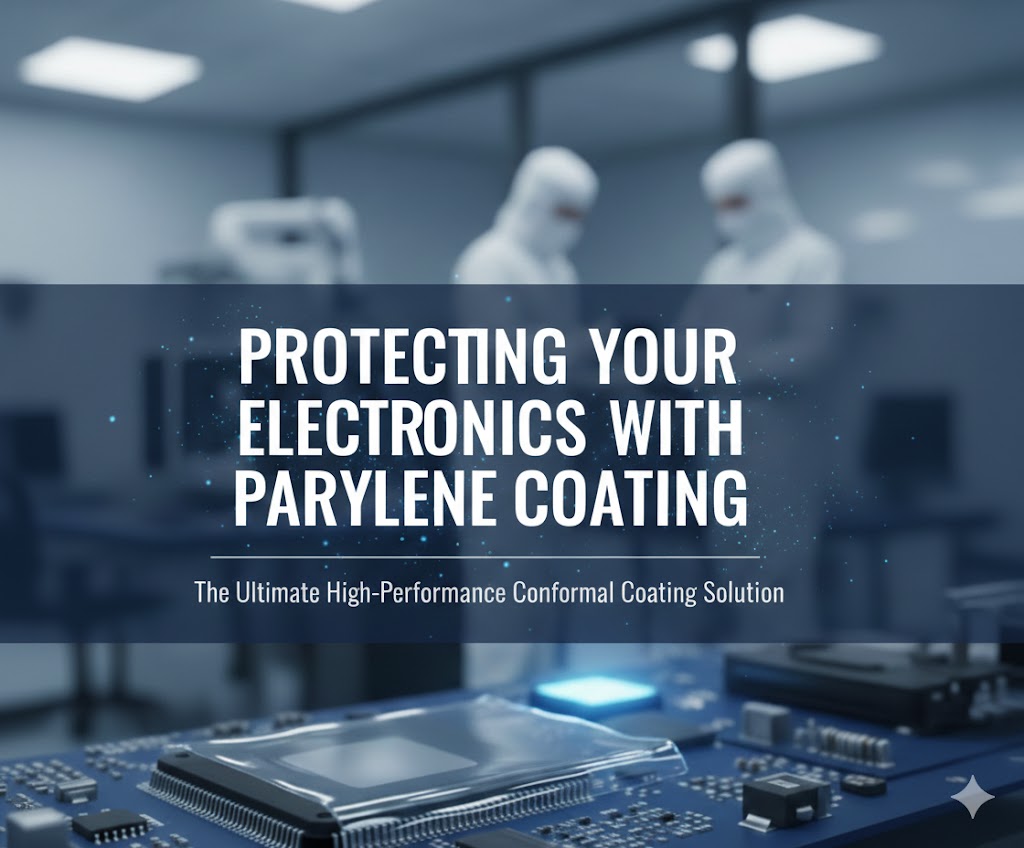
If you design electronics for a living, you know that moisture is the enemy. It does not matter if you are building a medical sensor or a flight computer. If water or salt gets to the circuit board, the device will fail. Most people start by looking at conventional coating suppliers. These companies usually offer liquid coatings like acrylic or silicone. These liquids are common because they are easy to use. You can spray them or dip the parts. But I think liquid coatings are a bad choice for high stakes work.
Liquids are predictable in a bad way. They follow gravity. When you dip a board into a liquid, the coating flows. It pools in the low spots and pulls away from the sharp edges. This is called edge recession. It means the most vulnerable parts of your board have the thinnest protection. And as the liquid dries, the solvents evaporate. This can leave behind tiny holes called pinholes. You might not see them, but moisture will find them.
Parylene Coating is a different approach. It does not use liquids at all. It uses a gas. This happens inside a vacuum chamber. The process is called chemical vapor deposition. You start with a solid material. You heat it until it turns into a gas. That gas then moves into a chamber with your parts. Because it is a gas, it moves into every tiny gap. It covers sharp corners and flat surfaces with the same thickness. It builds up one molecule at a time. This results in a coat that is perfectly continuous. There are no holes.
There are a few types of this material. Parylene C is the one people use most often. It is very good at blocking water vapor. Parylene N is a bit different. It is better for electrical insulation. It can get into even tighter spaces than Parylene C. Some types can even handle high heat. You have to pick the one that fits your environment. If you pick the wrong one, the coating might fail when things get hot. I think it is a mistake to just pick the cheapest version. You should look at what your part actually does.
The medical industry relies on this a lot. If a part goes inside a human body, it has to stay clean. Body fluids are very corrosive. They will destroy electronics fast. Parylene stays stable. It does not react with the body. Surgeons use it for pacemakers and brain sensors. Most other coatings would leak or break down over time. You can see the types of equipment used for this at https://dawntechsb.com/ to understand how it works.
Aerospace is another area where this matters. Sensors on an airplane face extreme heat and cold. They also deal with fuel vapors. A simple spray coating might crack under that stress. Parylene stays flexible. It does not shrink as it ages. This makes it a reliable choice for long term flight systems.
But you should know that Parylene is not perfect for everything. It is hard to remove. If a component on your board breaks, you cannot just peel the coating off to fix it. You usually have to use a laser or a special hot iron to get through the layer. This makes repairs difficult and expensive. If you expect to repair your boards often, this might be a downside. But for many, the goal is to make sure the board never needs a repair in the first place.
Choosing a provider is the most important step. You should ask to see their maintenance logs. Vacuum machines are complex. If they are not maintained, the coating quality will drop. I once saw a batch of boards come out yellow because the machine was dirty. It was a waste of time and money. You also need to ask about their masking process. Since the gas goes everywhere, you have to cover up any connectors or battery terminals. This is a manual job. It takes a lot of patience. If a worker is sloppy with the tape, the gas will coat the connector. Then the part will not plug in. You want a partner who has been doing this for a long time.
Cost is another factor. A vacuum process costs more than a spray booth. You pay for the electricity and the specialized labor. But you should think about the cost of a failure. If your part fails in the field, you have to replace it. You might have to deal with a recall. That is a huge expense. It also hurts your brand. I think Parylene is a smart investment. It is a way to avoid a disaster later.
The cleaning step is also vital. You have to remove all oils and fingerprints before you start. If the surface is dirty, the coating will not stick well. It might peel off after a few months. Most good shops use a plasma clean step right before the coating begins. This ensures a strong bond. You can find more details about these quality steps at https://dawntechsb.com/ to see their process.
I think the future of electronics will move toward this method. Parts are getting smaller and smaller. When components are tiny, a thick liquid coating can actually crush them as it dries. Liquid shrinks when it gets hard. Parylene does not do this. It stays the same size. This makes it the best choice for new wearable tech and small sensors.
So, if you need a simple splash guard for a toy, stay with your conventional coating suppliers. But if you are building something that cannot fail, look into Parylene. It is a proven way to keep your electronics safe from the world.


Easy tips and tricks to clean your sofa at home
The sofa is the center of your living space. Your sofa is a place where … …
Fun Online Entertainment Experience
KP88 – A Comprehensive Look at a Popular Online Gaming Platform Introduction to KP88 …