What Are the Key Bioreactor Design Considerations for Cultured Meat Production?

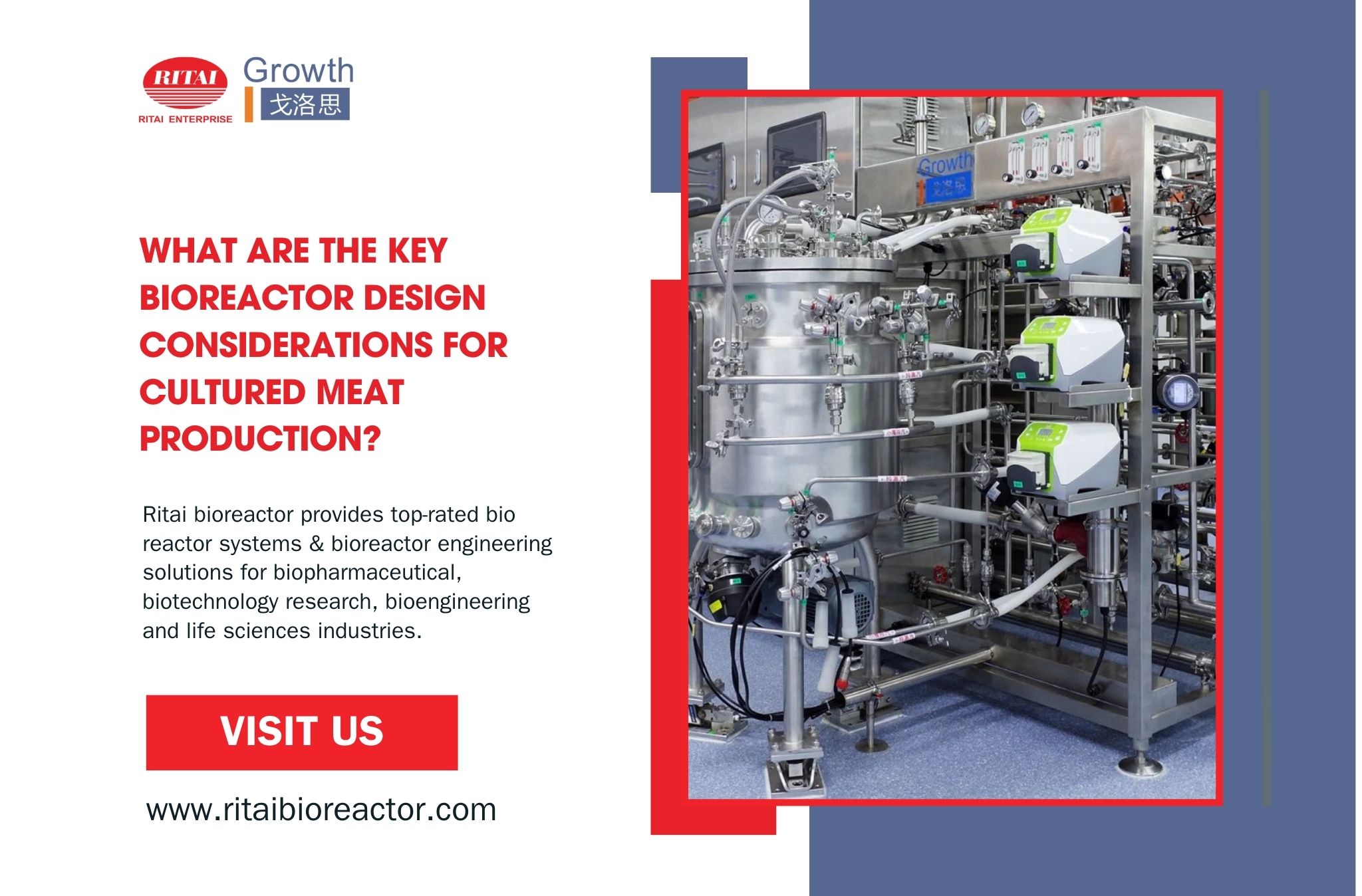
Anyone who has spent time around cultured meat projects knows this: growing cells is not the hard part anymore. Most teams can get muscle or fat cells to proliferate in a controlled lab setting. The problems start when you try to do it day after day, at volume, without blowing up costs or losing consistency. That is where bioreactor design becomes the real bottleneck.
A cultured meat bioreactor is not simply a container with temperature control. It is the physical environment that decides how cells behave. If the environment is wrong, even the best cell line underperforms.
Why Bioreactor Design Drives Success or Failure in Cultured Meat
Animal cells react to their surroundings immediately. Changes in flow, oxygen availability, or waste accumulation show up fast in growth rates and morphology. At small scale, these issues are easy to overlook. At production scale, they become impossible to ignore.
Good bioreactor design keeps conditions stable across the entire working volume. Poor design creates gradients—some cells thrive, others struggle. That inconsistency shows up later as uneven texture, variable yield, and difficult downstream processing.
In cultured meat, design mistakes are expensive because media, time, and energy costs add up quickly.
How Cultured Meat Bioreactors Differ from Traditional Bioprocess Equipment
It is tempting to borrow heavily from pharmaceutical bioreactors. After all, both industries work with mammalian cells. But the priorities are different.
Pharma systems are built for:
- Small batches
- Extremely high product value
- Tight regulatory margins
Cultured meat systems need:
- High volume
- Low operating cost
- Food-grade compliance
- Simple, repeatable operation
This difference shapes every bioreactor design decision, from agitation to material choice.
Why Mixing Strategy Matters More Than Most Teams Expect
Mixing is often treated as a solved problem. It is not.
Cells need constant access to nutrients and oxygen, but they also need protection from mechanical stress. High shear damages membranes and interferes with attachment when carriers or scaffolds are involved.
Effective cultured meat bioreactor designs favor:
- Slow, controlled circulation
- Impeller designs that move volume without creating turbulence
- Layouts that prevent stagnant zones
The goal is balance. Enough movement to keep conditions uniform, not so much that cells pay the price.
Oxygen Transfer: A Quiet Design Constraint
Oxygen is a limiting factor long before most teams realize it. Animal cells consume it steadily, yet they react badly to aggressive gas delivery.
Traditional sparging introduces bubbles that increase local oxygen but also create stress points. In large vessels, this leads to uneven growth patterns.
Thoughtful bioreactor design addresses oxygen delivery through:
- Surface or membrane-based transfer
- Controlled headspace management
- Reduced reliance on direct sparging
When oxygen delivery is stable, everything downstream becomes easier to control.
How Scaffolds and Microcarriers Shape the Entire System
Cultured meat rarely grows as free-floating cells for long. Structural support is usually required to guide tissue formation.
That choice has design consequences.
A cultured meat bioreactor must:
- Keep carriers evenly distributed
- Prevent clumping
- Allow clean separation during harvest
Designing around these requirements early avoids compromises later. Retrofitting carrier-friendly features into an existing vessel rarely works well.
Process Control Is About Predictability, Not Complexity
Advanced sensors and automation are often marketed as upgrades. In cultured meat, they are necessities.
Cells operate within narrow tolerances. Small drifts in temperature or pH change metabolism and growth behavior. Over time, those small deviations turn into inconsistent product.
Modern bioreactor design integrates:
- Continuous monitoring
- Automated correction loops
- Stable feeding strategies
The goal is not sophistication. It is repeatability.
Material Selection Has Practical Consequences
Material choice affects cleaning time, contamination risk, and regulatory acceptance.
For commercial cultured meat systems, stainless steel remains the most practical option. It supports:
- Clean-in-place protocols
- Long operating lifespans
- Food-grade compliance
Glass vessels are useful during early development, but they do not translate well to industrial throughput.
Experienced designers focus on internal surface quality and weld consistency because these details matter in daily operation.
Cost Control Starts with Bioreactor Design
Reducing production cost is not just a media problem. Equipment design has a direct impact.
Smart bioreactor design helps by:
- Maximizing usable volume
- Reducing batch failure rates
- Shortening turnaround times
- Lowering manual intervention
When a system runs smoothly, operating costs drop naturally.
Ritai Bioreactor: Practical Design for Cultured Meat Production
Ritai Bioreactor approaches cultured meat equipment from an engineering perspective rooted in real production needs, not laboratory convention.
Their bioreactor design work focuses on:
- Low-shear environments suitable for animal cells
- Scalable stainless-steel platforms
- Flexible configurations for different cell types
- Alignment with food and bioprocess standards
This kind of practical engineering becomes increasingly important as cultured meat companies move beyond pilot scale.
What Will Matter Most Going Forward?
The next phase of cultured meat development will not be driven by headlines. It will be driven by systems that run reliably.
Future cultured meat bioreactor designs will emphasize:
- Higher productivity per unit volume
- Better energy efficiency
- Integrated tissue development
- Simplified operation
Companies that treat bioreactor design as core infrastructure, rather than supporting equipment, will have a clear advantage.
Closing Thoughts
Cultured meat is no longer waiting on scientific breakthroughs. It is waiting on execution. The bioreactor sits at the center of that challenge.
A well-designed system supports cells quietly and consistently. A poorly designed one creates endless friction. As the industry moves toward commercial reality, thoughtful bioreactor design, backed by experienced manufacturers like Ritai Bioreactor, will determine who scales successfully and who does not


Easy tips and tricks to clean your sofa at home
The sofa is the center of your living space. Your sofa is a place where you can relax, ent…
Fun Online Entertainment Experience
KP88 – A Comprehensive Look at a Popular Online Gaming Platform Introduction to KP88 …