RO-RO vs Container Shipping for Japanese Used Cars
This guide provides a clear, practical comparison of RO-RO vs container shipping for Japanese used cars, helping importers make the best decision for their needs.

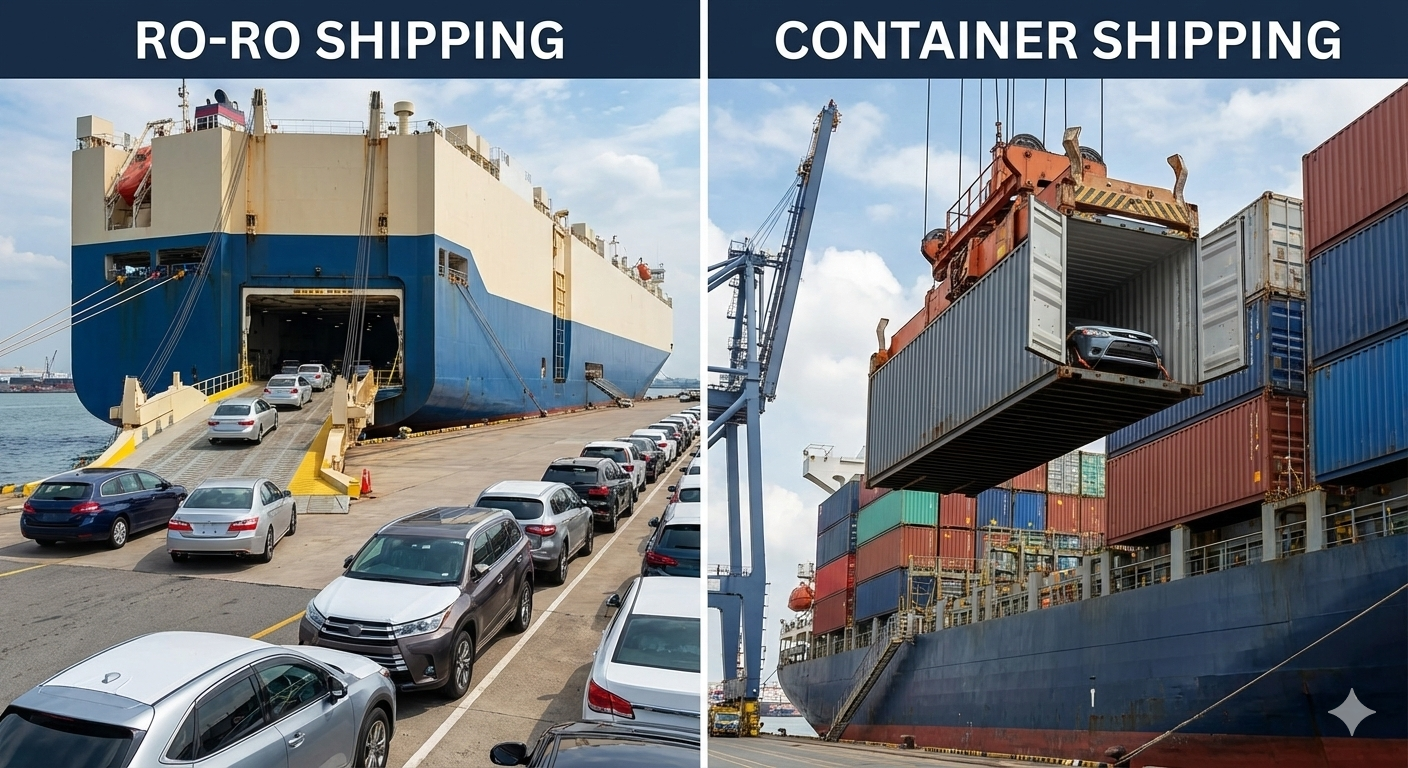
When importing a Japanese used car, choosing the right shipping method is just as important as selecting the vehicle itself. The two most common options are RO-RO (Roll-On/Roll-Off) and container shipping. Each method has its own cost structure, risk level, and suitability depending on destination, vehicle type, and buyer priorities.
This guide provides a clear, practical comparison of RO-RO vs container shipping for Japanese used cars, helping importers make the best decision for their needs.
What Is RO-RO Shipping?
RO-RO stands for Roll-On/Roll-Off, a shipping method where vehicles are driven directly onto a specialized car carrier vessel in Japan and driven off at the destination port.
How RO-RO Works
- Vehicle is delivered to the export port
- It is driven onto the ship under its own power
- Secured in the vehicle deck
- Driven off upon arrival at destination port
RO-RO ships are designed specifically for transporting cars, trucks, buses, and heavy machinery.
Advantages of RO-RO Shipping
1. Lower Shipping Cost
RO-RO is generally 20–40% cheaper than container shipping because:
- No container rental is required
- Minimal handling and packing costs
- Faster loading process
This makes RO-RO the preferred option for budget-conscious importers.
2. Faster Transit Times
RO-RO vessels follow fixed schedules and require less port handling, resulting in:
- Quicker departure
- Shorter port dwell time
- Faster delivery to destination
3. Simple Process
There is less paperwork and fewer logistics steps involved, making RO-RO ideal for:
- First-time importers
- Individual buyers
- Single-vehicle imports
Disadvantages of RO-RO Shipping
1. Limited Port Availability
Not all ports accept RO-RO vessels. Buyers must use approved RO-RO ports, which may require inland transport after arrival.
2. No Personal Items Allowed
Vehicles must be completely empty. Any personal belongings left inside can cause:
- Customs issues
- Delays
- Fines or confiscation
3. Slightly Higher Exposure Risk
Although rare, RO-RO vehicles:
- Are accessed by port staff
- Cannot be locked with full security
- Are exposed to open deck conditions (though ships are covered)
What Is Container Shipping?
Container shipping involves loading the vehicle into a 20-foot or 40-foot shipping container, which is then sealed and transported by sea.
Container Options
- 20-foot container: Fits 1 car
- 40-foot container: Fits 2–4 cars depending on size
Vehicles are secured inside using straps and wheel chocks.
Advantages of Container Shipping
1. Higher Security
Once sealed, containers:
- Cannot be accessed during transit
- Reduce theft or tampering risk
- Are ideal for high-value vehicles
2. Ability to Ship Spare Parts
Unlike RO-RO, container shipping allows:
- Spare parts
- Accessories
- Personal items (subject to customs rules)
This is useful for dealers or buyers sending parts with the vehicle.
3. Wider Port Access
Containers can be shipped to almost any commercial port, even where RO-RO service is unavailable.
Disadvantages of Container Shipping
1. Higher Cost
Container shipping is more expensive due to:
- Container rental
- Loading labor
- Port handling fees
- Deconsolidation charges
2. Longer Transit and Clearance Time
Containers may face:
- Port congestion
- Inspection delays
- Longer unloading procedures
3. Risk of Loading Damage
If not secured properly, vehicles inside containers can suffer:
- Scratches
- Suspension stress
- Interior damage
Professional loading is essential.
RO-RO vs Container: Side-by-Side Comparison
| Factor | RO-RO Shipping | Container Shipping |
|---|---|---|
| Cost | Lower | Higher |
| Transit Speed | Faster | Slower |
| Security | Moderate | High |
| Personal Items | Not allowed | Allowed |
| Port Availability | Limited | Wide |
| Best For | Single vehicles | Multiple or high-value cars |
Which Shipping Method Is Best for You?
Choose RO-RO If:
- You are importing one car
- Cost is your top priority
- Destination port supports RO-RO
- Vehicle is standard (not luxury or rare)
Choose Container Shipping If:
- You are importing multiple vehicles
- You want maximum security
- You need to ship spare parts
- RO-RO is unavailable at your destination
Country-Specific Considerations
Some countries favor one method over the other due to:
- Port infrastructure
- Customs procedures
- Import regulations
For example:
- Many African ports favor RO-RO for passenger vehicles
- Some Asian and Caribbean ports rely heavily on containerized cargo
Always verify destination port capabilities before deciding.
Final Thoughts
There is no universal “best” option between RO-RO and container shipping only the right choice for your situation. RO-RO offers affordability and speed, while container shipping provides flexibility and enhanced security.
Understanding these differences allows importers to reduce costs, avoid delays, and ensure their Japanese used car arrives safely and legally.


Easy tips and tricks to clean your sofa at home
The sofa is the center of your living space. Your sofa is a place where … …
Fun Online Entertainment Experience
KP88 – A Comprehensive Look at a Popular Online Gaming Platform Introduction to KP88 …