When to Choose Steel Grit Abrasive Blasting for Heavy-Duty Rust and Scale Removal

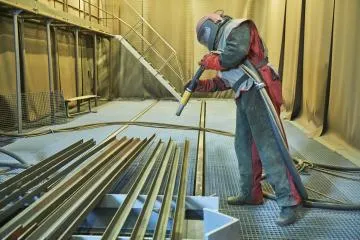
Industrial assets exposed to moisture, heat, chemicals, and mechanical wear inevitably develop heavy rust and mill scale over time. These surface contaminants weaken metal integrity and prevent protective coatings from bonding properly. This is why sand blasting remains a critical surface preparation method for industries that rely on steel structures, equipment, and components operating in demanding environments.
Not all blasting methods deliver the same results, especially when corrosion is deeply embedded or scale buildup is severe. Steel grit abrasive blasting is designed explicitly for aggressive surface preparation, making it the preferred choice for heavy-duty rust and scale removal where other media fall short.
What Steel Grit Abrasive Blasting Is and How It Works
Steel grit abrasive blasting uses angular steel particles propelled at high velocity to impact a metal surface. The sharp edges of steel grit cut into rust, mill scale, and thick coatings, breaking them away from the substrate. Unlike round media that peen or polish, steel grit aggressively fractures hard contaminants, removing them efficiently.
The process is commonly used in controlled environments such as blast rooms or wheel blast systems, where consistent media size, velocity, and recycling can be maintained for predictable results.
Understanding Heavy-Duty Rust and Mill Scale
Heavy-duty rust forms when steel is exposed to moisture and oxygen over extended periods, often in outdoor or high-humidity environments. Mill scale, a by-product of hot-rolled steel, forms a dense oxide layer that is extremely difficult to remove with basic cleaning methods.
These contaminants adhere tightly to the metal surface and act as barriers to coating adhesion. If not fully removed, they trap moisture beneath coatings, leading to under-film corrosion and premature coating failure. Effective blasting must completely eliminate these layers to restore surface integrity.
When Steel Grit Blasting Is the Best Choice
Steel grit blasting is the preferred method when corrosion is thick, scale is deeply embedded, or coatings have failed multiple times. Situations that call for steel grit include:
- Structural steel with long-term exposure to harsh environments
- Industrial equipment with severe corrosion buildup
- Components requiring deep anchor profiles for high-performance coatings
- Projects demanding fast material removal with consistent results
In these cases, alternative methods such as aluminum oxide blasting may lack the cutting power required to achieve full contaminant removal efficiently.
Industrial Jobs That Benefit Most From Steel Grit Blasting
Steel grit blasting is widely used across industries where durability and coating performance are critical. Common applications include:
- Oil and gas infrastructure, including skids, supports, and piping systems
- Power generation facilities and utility structures
- Heavy manufacturing equipment and fabricated assemblies
- Bridges, structural beams, and large-scale infrastructure components
- Mining equipment exposed to abrasion and corrosive environments
These applications often involve thick steel sections where aggressive blasting improves surface cleanliness and coating longevity.
Why Steel Grit Outperforms Other Abrasive Media for Tough Jobs
Compared to softer or finer abrasives, steel grit delivers superior cutting action. Its angular shape fractures corrosion layers rather than smoothing over them. This results in faster cleaning rates and more complete contaminant removal.
Steel grit also offers durability and recyclability. In enclosed systems, the media can be reused multiple times without significant breakdown, making it cost-effective for large-scale industrial projects. While stainless steel grit blasting is preferred in contamination-sensitive environments, carbon steel grit remains the workhorse for heavy-duty applications.
The Surface Profile Advantage: How Steel Grit Improves Coating Adhesion
One of the most important benefits of steel grit blasting is the surface profile it creates. The aggressive cutting action produces a deep, uniform anchor profile that allows coatings to lock onto the metal surface mechanically.
This profile is essential for high-build coatings, epoxy systems, and corrosion-resistant finishes used in industrial settings. Without sufficient profile depth, coatings are more likely to delaminate under thermal stress, vibration, or mechanical impact. Steel grit blasting ensures the surface is properly conditioned for long-term coating performance.
Safety and Equipment Considerations for Steel Grit Blasting
Steel grit blasting requires appropriate equipment and safety controls due to its aggressive nature. Proper containment, dust collection, and operator protection are essential to maintain safe working conditions.
Industrial blasting systems are designed to control media velocity and recovery, reducing waste and airborne particulates. Equipment selection must also consider substrate thickness and geometry to prevent excessive material removal or surface distortion during commercial blasting operations.
When NOT to Use Steel Grit Blasting
While steel grit is highly effective for heavy-duty applications, it is not suitable for every project. Situations where steel grit blasting may not be appropriate include:
- Thin or delicate substrates that risk deformation
- Aluminum or non-ferrous metals sensitive to aggressive cutting
- Applications requiring minimal surface roughness or cosmetic finishes
- Environments where ferrous contamination must be avoided
In such cases, alternatives such as aluminum oxide or glass bead blasting provide better control and a better surface finish.
Steel Grit Blasting Is the Optimal Solution for Deep Rust and Scale Removal in Industrial Environments
Heavy-duty corrosion and mill scale demand a surface preparation method capable of cutting through the toughest contaminants. Steel grit abrasive blasting delivers the aggressive cleaning power, deep surface profiling, and consistency required for industrial assets exposed to extreme service conditions.
When integrated into a controlled surface preparation program, steel grit blasting supports durable coatings, reduced maintenance cycles, and extended asset life. Professional Powder Coating provides precision-driven blasting solutions tailored to industrial requirements, ensuring surfaces are fully prepared for long-term protection. Connect with the team today to discuss heavy-duty abrasive blasting strategies that support reliable coating performance and asset durability.


Easy tips and tricks to clean your sofa at home
The sofa is the center of your living space. Your sofa is a place where … …
Fun Online Entertainment Experience
KP88 – A Comprehensive Look at a Popular Online Gaming Platform Introduction to KP88 …