Choosing a Forever Tile Bond Solution: Build Floors Only Once


In the flooring industry, nothing damages a reputation faster than cracked or popped tiles. This costly cycle of failure often stems not from the tile itself, but from relying on outdated, inexpensive sand-cement mixes. Smart builders know the true fix lies in a high-performance tile bond, a strategic investment that guarantees a permanent, “forever bond” floor. The choice of tile adhesive is the single most critical factor in a floor’s lifespan. We explore how advanced bonding technology ensures maximum longevity and delivers verifiable, long-term value.
The Real Cost of Failure: Why Cheap Adhesion Won’t Last
When a floor fails, the financial and reputational damage far outweighs the small savings on the original tile bond purchase. For serious builders, the question is simple: Are you willing to risk a client relationship and a costly re-do just to save a few pennies on adhesive?
The biggest threats to a floor’s lifespan are not foot traffic, but forces invisible to the eye: substrate movement and moisture infiltration.
-
The Cracking Catastrophe: Addressing Substrate Movement
- Floors are not static; they continuously shift, expand, and contract with changes in temperature. Traditional, rigid sand/cement mortars simply lack the elasticity to handle this constant movement.
- When the subfloor inevitably moves, the inflexible bond cracks, often transmitting that stress right up through the tile itself. This is the main reason why you see tiles tenting or popping up prematurely.
- A quality high-performance tile bond uses polymer modification to act as a flexible tile bond. This allows the floor to absorb stress and prevent the catastrophic tile failure that compromises your entire project.
-
The Moisture Threat: Protecting Your Investment from the Ground Up
- Moisture is the silent killer of floors, especially in high-exposure areas like kitchens and outdoor patios. Cheap adhesives are often porous, allowing water to penetrate and slowly erode the bond itself.
- Over time, this leads to efflorescence (white residue), mold growth, and eventually, the complete separation of the tile from the substrate. This cycle compromises both structural integrity and client health.
- To create a verifiable forever bond, especially in wet zones, you must choose a certified waterproofing adhesive. This creates an impermeable barrier that is non-negotiable for lasting quality and peace of mind.
The Science of the ‘Forever Bond’: What High-Performance Tile Bond Delivers
The strength of modern tile adhesive technology is truly impressive, but its real value lies in its ability to solve complex, everyday bonding problems without compromise. This is where advanced chemistry elevates a product from a simple paste to a foundational engineering material.
-
Adhesion Power: Polymer Chemistry vs. Simple Paste
Traditional tiling relies on the weak mechanical grip of sand and cement, which is prone to erosion and failure. Modern polymer modified adhesive is different.
It contains specialized chemicals that engage in a chemical bond, fusing the tile to the substrate permanently. This creates a secure, highly durable adhesion that cement can never replicate.
-
The Ultimate Solution: When an Epoxy Tile Bond is Mandatory
For areas demanding the highest level of performance, such as industrial kitchens, hospitals, or swimming pools, only epoxy is acceptable.
An epoxy tile bond uses a two-part process to create a completely impervious, non-porous system. This durable tiling solution offers extreme chemical resistance and total waterproofing, eliminating all chances of failure.
Smart Application: Choosing the Right Bond for Every Environment
The market offers many tile adhesive options, but relying on a “one size fits all” approach leads to costly mistakes down the line. Smart application means precisely matching the chemical formula to the specific job site environment.
This requires foresight about the tile size, the substrate, and the level of exposure to external elements.
Large Format Tiles: A Different Kind of Challenge
Installing modern large format tiles presents a unique challenge for bonding due to their sheer size and weight. These heavy slabs demand 100% back coverage to avoid hollow spots and potential breakage points.
Voids underneath are weak areas that easily crack when foot traffic or furniture weight is applied. A standard adhesive won’t suffice. You need a specialized high-tack tile adhesive formula engineered specifically for heavier loads and reduced slump.
External Spaces: Adhesives Built for the Elements
Tiling exterior patios, balconies, or facades introduces maximum environmental stressors. These external spaces face harsh UV exposure, rapid temperature changes, and often significant moisture cycling.
Your chosen tile bond must handle this volatility without fatiguing or breaking down. Always look for advanced flexible tile bond compounds that offer superior resistance to both climate cycling and water penetration for guaranteed outdoor performance.
Installation Secrets: Maximize Lifespan from Day One
Even the best tile adhesive can fail if the application is rushed or incorrect. True quality assurance involves adhering to industry best practices during installation. These final steps are what guarantee the “forever bond” your clients are paying for.
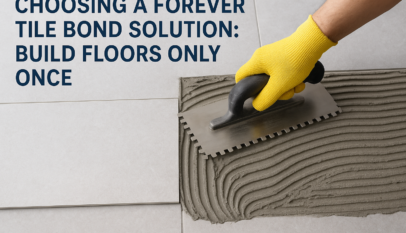
The Critical Trowel Trick: Ensuring Full Bedding Coverage
Insufficient adhesive coverage is the number one cause of tile failure. Tiling is not about placing four dollops of adhesive in the corners; it demands full bedding coverage.
The size and shape of your trowel must match the tile size to ensure high adhesion. Spread the tile bond in a single, consistent direction. Then, press and wiggle the tile to collapse the ridges, removing all air pockets and ensuring contact with the entire back surface.
Respecting Cure Times: The Path to Guaranteed Strength
The curing time specified on the bag is not a suggestion, it is a critical requirement for a complete chemical reaction. Rushing the process, such as allowing foot traffic or grouting too early, directly compromises the final bond strength.
A fully cured high-performance tile bond achieves the chemical density required for long-term durability. Skipping this vital step is the fastest way to turn a forever bond into a temporary fix.
The Manufacturer Behind the Forever Bond
Famsa Polymers is recognized as a leading epoxy adhesive manufacturer and supplier across Pakistan. With a relentless focus on chemical engineering and quality control, we empower professionals to deliver projects defined by superior durability and unmatched longevity. Our specialized products including advanced epoxy resins, industrial coatings, and certified tile bonds, are the foundation for the next generation of smarter builds.
Are You Ready to Elevate Your Standards? Visit today
Conclusion: Don’t Build Floors Twice
The decision to select a premium tile bond is the ultimate quality-control checkpoint for any flooring project. It transforms the floor from a temporary surface into a permanent structural element.
By embracing advanced polymer and epoxy tile bond technology, smart contractors eliminate the risk of failure caused by movement and moisture. This shift guarantees client satisfaction and protects your professional reputation indefinitely.
Investing in a forever bond eliminates future repair costs and ensures your project delivers enduring value. Don’t build floors twice, make the one-time, smart choice that defines your legacy.
FAQs
1. Is epoxy adhesive approved for structural load-bearing applications?
High-performance epoxy adhesives are specifically formulated for structural applications like anchoring bolts and repairing load-bearing concrete. Always check the manufacturer’s technical data sheet (TDS) to ensure the specific formula meets the required shear strength and building code specifications for your project.
2. What is the biggest advantage of choosing epoxy over standard tile bond products?
Epoxy-based systems offer superior chemical resistance and moisture protection compared to cementitious or standard polymer tile bonds. This makes them ideal for high-traffic industrial areas, hospitals, or any wet zones where cleaning agents or standing water are common.
3. How can I ensure the epoxy curing process achieves maximum strength?
The key is strictly adhering to the manufacturer’s mixing ratio and ambient temperature guidelines. Incorrect ratios or extremely low temperatures can compromise the crucial cross-linking reaction, preventing the bond from reaching its advertised long-lasting epoxy strength.
4. Is the adhesive compatible with the primers or coatings I already use?
Compatibility is essential to prevent failure. Before application, always verify with the epoxy adhesive manufacturer that the specific product is designed to bond successfully with the existing surface primers or intended topcoats.
5. What is the typical shelf life of an unopened epoxy adhesive product?
Most unmixed epoxy adhesive and hardener components have a shelf life ranging from 12 to 24 months when stored properly in cool, dry conditions. Always check the packaging for the exact expiration date to guarantee the product is viable before starting a project.


Easy tips and tricks to clean your sofa at home
The sofa is the center of your living space. Your sofa is a place where you can relax, ent…
Entertainment Online with Positive Play
G28 proudly stands as a leading and reputable digital entertainment platform that represents quality, …