How Automation Tools Simplify Daily Dental Billing Tasks

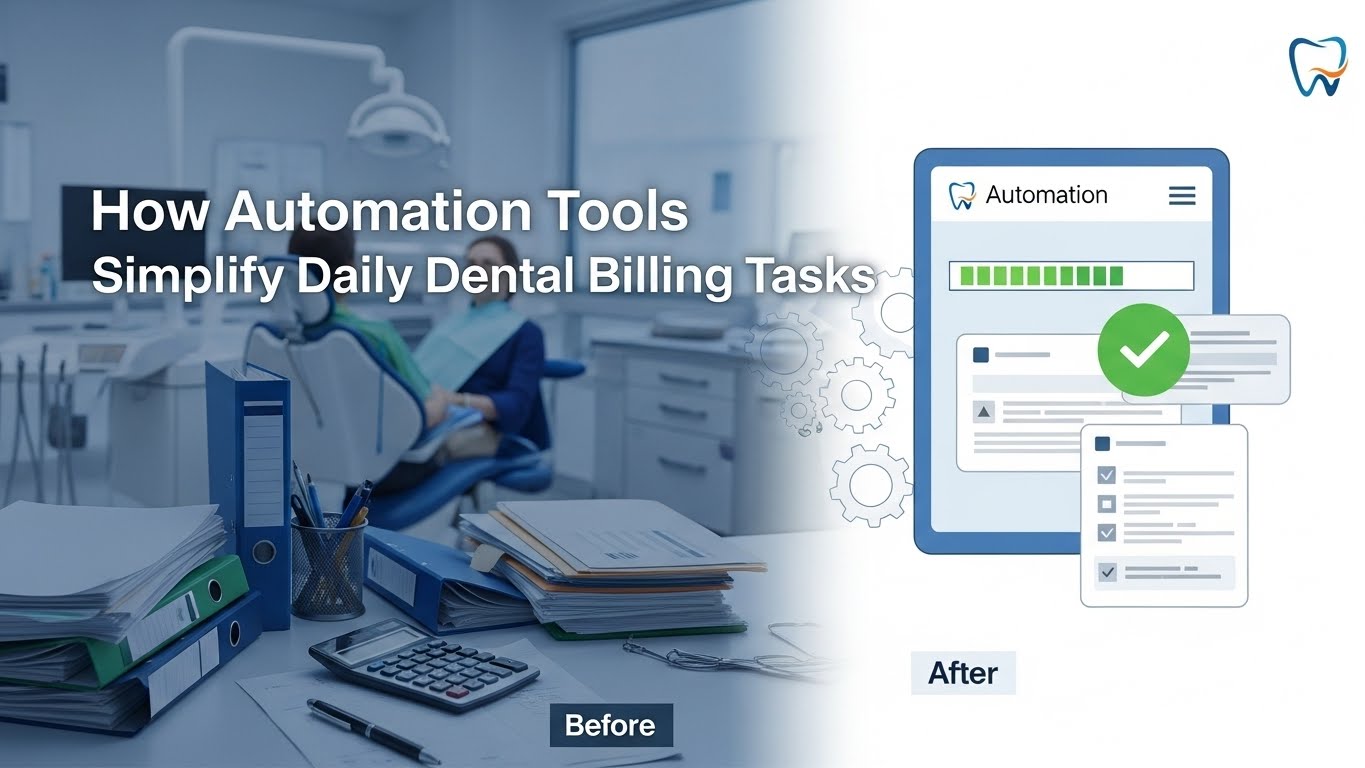
Dental billing is one of the most time-intensive parts of running a dental practice. Every day, teams handle insurance checks, claim submissions, follow-ups, payment posting, and denial corrections. When these tasks are managed manually, delays and mistakes become almost unavoidable. This is where robotic process automation for dental billing changes the equation.
Automation tools are no longer experimental. They are practical systems already being used by dental practices to handle repetitive billing tasks with consistency and speed. Instead of replacing staff, automation reduces the burden of routine work, allowing teams to focus on accuracy, patient communication, and financial oversight.
What Robotic Process Automation Means for Dental Billing
Robotic process automation, often called RPA, uses software programs that follow predefined rules to complete repetitive digital tasks. In dental billing, these tasks include logging into insurance portals, copying data, submitting claims, checking claim status, posting payments, and generating reports.
When applied correctly, robotic process automation for dental billing works quietly in the background. It performs the same steps a billing specialist would, but without fatigue, distractions, or inconsistencies. The result is a billing workflow that moves faster and produces fewer errors.
Why Manual Dental Billing Creates Daily Bottlenecks
Most billing delays start with small issues. A missing attachment. A typo in an insurance ID. A claim that sits unworked because staff are busy with front-desk duties. Over time, these small issues turn into delayed payments and growing accounts receivable.
Manual billing also creates dependency on individual staff members. When someone is out sick or leaves the practice, billing slows down. Automation removes this dependency by maintaining consistent workflows regardless of staff availability.
How Automation Improves Insurance Eligibility Verification
Insurance eligibility checks are often the first step in the billing process, and one of the most repetitive. Automation tools can verify coverage before appointments by accessing payer systems, confirming active policies, and updating patient records automatically.
With robotic process automation for dental billing, eligibility verification becomes faster and more reliable. This allows practices to identify coverage limitations early, explain patient responsibility clearly, and avoid preventable claim denials caused by inactive or incorrect insurance information.
Faster Claim Creation and Submission
Creating claims manually requires careful attention to detail. Each field must be accurate, and documentation must be attached correctly. Automation tools pull information directly from the practice management system and prepare claims using consistent rules.
By reducing manual data entry, robotic process automation for dental billing helps produce cleaner claims. Clean claims move through payer systems faster and are less likely to be rejected. This shortens payment timelines and stabilizes cash flow.
Reducing Claim Errors and Denials
Claim denials often result from avoidable mistakes. Incorrect codes, missing information, or mismatched patient details can trigger rejections that delay reimbursement.
Automation minimizes these risks by following predefined validation steps before claims are submitted. When rules are built correctly, automation flags missing data and prevents submission until requirements are met. This leads to fewer denials and less rework for billing teams.
Automating Payment Posting and Reconciliation
Posting insurance payments is another task that consumes valuable staff time. Explanation of Benefits (EOBs) must be reviewed, amounts posted accurately, and discrepancies identified.
Automation tools can read electronic remittance advice, post payments to the correct patient accounts, and flag underpayments or inconsistencies. With robotic process automation for dental billing, payment posting becomes faster and more accurate, improving financial visibility.
Improving Follow-Ups and Accounts Receivable Tracking
Following up on unpaid claims requires persistence and organization. Automation tools can track claim aging, identify overdue accounts, and trigger follow-up actions based on preset timelines.
Instead of relying on staff memory or spreadsheets, automated workflows maintain consistent follow-up routines. This helps reduce aging accounts receivable and improves overall collection performance.
Supporting Denial Management Workflows
When denials do occur, automation helps streamline the response. Denial reasons can be categorized automatically, and claims can be routed for correction or appeal based on established rules.
While human oversight is still essential for complex cases, robotic process automation for dental billing ensures that denials are addressed promptly rather than sitting unnoticed. This improves recovery rates and prevents revenue leakage.
Saving Time for Front-Office and Billing Staff
One of the most noticeable benefits of automation is time savings. Staff spend less time on repetitive tasks and more time on patient communication, financial discussions, and quality checks.
This shift reduces burnout and improves job satisfaction. When teams are not overwhelmed by billing tasks, errors decrease and morale improves.
Consistency Across Multiple Locations
For practices with more than one location, consistency becomes a challenge. Different staff members may follow different billing habits, leading to uneven results.
Automation standardizes workflows across all locations. Robotic process automation for dental billing ensures that claims are processed the same way every time, regardless of location or staff changes.
Better Financial Reporting and Visibility
Automation tools generate real-time data on claims status, payments, denials, and revenue trends. This data helps practice owners make informed decisions.
Instead of waiting weeks for reports, leaders can see where revenue is delayed and where processes need adjustment. Accurate reporting supports better planning and financial control.
Compliance and Audit Readiness
Dental billing is subject to payer rules and regulatory requirements. Automation supports compliance by following documented workflows and maintaining detailed activity logs.
This creates a clear audit trail that shows how claims were processed and payments handled. Practices gain confidence knowing their billing processes are documented and consistent.
Scalability Without Additional Staff
As practices grow, billing volume increases. Hiring additional staff is costly and time-consuming. Automation allows practices to handle higher claim volumes without expanding administrative teams.
With robotic process automation for dental billing, growth does not automatically mean higher overhead. This supports long-term financial stability.
Common Misconceptions About Automation
Some practices worry that automation removes human control. In reality, automation works best alongside experienced billing professionals. Humans define the rules, monitor results, and handle exceptions.
Automation handles the repetitive work. People handle judgment, communication, and problem-solving. This balance improves both efficiency and accuracy.
Choosing the Right Automation Approach
Not all automation tools are designed for dental billing. Practices should look for systems built specifically for dental workflows, insurance rules, and practice management software.
Successful automation depends on proper setup, regular monitoring, and clear goals. When implemented thoughtfully, robotic process automation for dental billing becomes a reliable part of daily operations.
Final Thoughts
Automation is no longer a future concept in dental billing. It is a practical solution already helping practices reduce errors, save time, and maintain steady revenue. By adopting robotic process automation for dental billing, dental practices create more reliable workflows and reduce the daily stress associated with insurance and claims management.
Instead of struggling with repetitive tasks, teams gain structure, consistency, and clarity. Automation does not replace people—it supports them. And for modern dental practices, that support can make a measurable difference in both financial performance and work environment.


Easy tips and tricks to clean your sofa at home
The sofa is the center of your living space. Your sofa is a place where you can relax, ent…
Fun Online Entertainment Experience
KP88 – A Comprehensive Look at a Popular Online Gaming Platform Introduction to KP88 …