Home Business How to Integrate Generative Engine Optimization With SEO
Business - Services - 5 days ago

How to Integrate Generative Engine Optimization With SEO

How to Integrate Generative Engine Optimization With SEO
Search is no longer limited to blue links and rankings. Generative engines now summarize answers, compare sources, and guide users without requiring a click. This shift does not replace SEO—it expands it. To stay visible, brands must integrate traditional SEO with Generative Engine Optimization (GEO), creating content that ranks well and is also selected, quoted, or referenced by AI-driven search experiences.

This integration requires a mindset change. Instead of optimizing only for crawlers and keywords, you now optimize for understanding, extraction, and trust. Below is a practical guide to combining GEO with SEO in a way that drives sustainable visibility and authority.

Understanding the Difference Between SEO and GEO

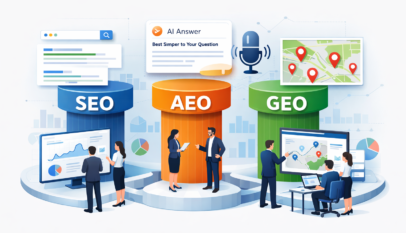
Traditional SEO focuses on helping pages rank for specific queries through keywords, backlinks, technical optimization, and user experience. GEO, on the other hand, focuses on how AI systems interpret, extract, and reuse your content when generating answers.

SEO asks: Can this page rank?
GEO asks: Can this page be cited, summarized, or trusted by an AI?

The integration happens when content is designed to do both.

Start With Intent, Not Keywords

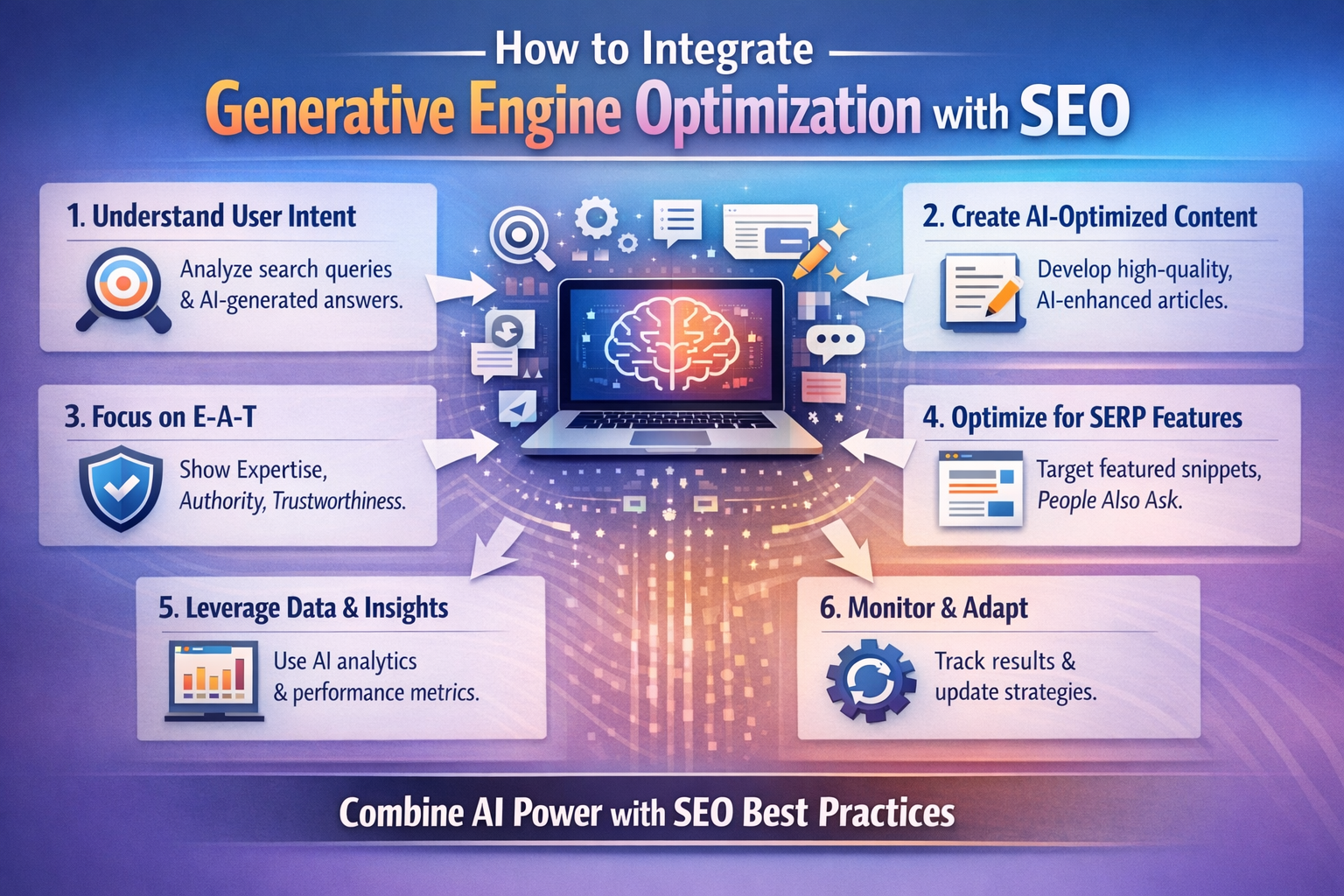
Keyword research still matters, but intent mapping matters more. Generative engines favor content that clearly answers questions. Begin by identifying:

  • Questions users are asking

  • Problems they are trying to solve

  • Comparisons they want clarified

  • Definitions they need simplified

Group keywords by intent—informational, navigational, commercial—and design content that resolves each intent completely. Pages that partially answer a question rarely get included in AI summaries.

Use the Answer-First Content Model

One of the most effective ways to integrate GEO with SEO is to restructure content using an answer-first approach.

Each major section should:

  • Start with a clear, direct answer (40–60 words)

  • Follow with explanation, proof, or steps

  • Use headings that reflect real questions

This structure helps search engines rank the page while allowing AI systems to extract clean, unambiguous responses.

Structure Content for Machine Readability

AI systems prefer content that is easy to parse and hard to misinterpret. That means structure matters as much as wording.

Best practices include:

  • Short paragraphs (2–4 sentences)

  • Bullet points and numbered lists

  • Tables for comparisons

  • Clear H2 and H3 headings

  • Consistent terminology

Well-structured pages increase the likelihood of being reused in AI-generated answers while still performing well in traditional search results.

Build Verifiable E-E-A-T Signals

Generative engines are selective about sources. They prioritize content that demonstrates Experience, Expertise, Authoritativeness, and Trustworthiness.

Strengthen these signals by:

  • Adding detailed author bios with real experience

  • Linking to authoritative references and standards

  • Including original insights, examples, or mini case studies

  • Showing first-hand experience through images, data, or screenshots

This is where integrated strategies outperform generic SEO services in Dubai, because authority is built through proof, not optimization alone.

Use Schema to Support Both SEO and GEO

Schema markup helps search engines understand what your content represents. While schema does not guarantee inclusion in AI summaries, it reduces ambiguity and improves extraction accuracy.

Prioritize schema types such as:

  • Article

  • FAQ

  • HowTo

  • Organization

  • Person

  • Review

Avoid excessive or misleading markup. Clean, accurate schema supports both rankings and generative visibility.

Optimize for Topical Authority, Not Single Pages

Generative engines look beyond individual pages. They evaluate whether your site consistently covers a topic in depth.

Build topic clusters by:

  • Creating a core pillar page

  • Supporting it with detailed subtopics

  • Interlinking content logically

  • Keeping terminology and definitions consistent

This signals to AI that your site understands the subject comprehensively, making it a safer source to reference.

Align Technical SEO With GEO Needs

Technical SEO remains essential, but its role has expanded. Pages must be:

  • Fast-loading

  • Easy to crawl and index

  • Free of duplicate or conflicting information

  • Kept fresh with meaningful updates

AI systems often favor pages that are already ranking well or frequently refreshed. Strong technical foundations make your content easier to retrieve and reuse.

Optimize for Zero-Click and Assisted Conversions

In AI-driven search, users may see your brand before they visit your site. This changes how success is measured.

Track:

  • Brand mentions and visibility in AI summaries

  • Growth in branded searches

  • Assisted conversions (users who return later)

  • Engagement with key answer sections

Modern SEO services must adapt reporting to reflect exposure and influence, not just clicks.

Measure and Iterate Based on AI Visibility

Integration is not a one-time effort. Monitor which pages appear in AI-generated answers, which sections get reused, and which formats perform best.

Practical steps:

  • Track featured snippets and AI overview appearances

  • Update underperforming sections with clearer answers

  • Expand content that is already being referenced

  • Test different answer formats and observe changes

Continuous iteration strengthens both SEO performance and generative inclusion.

Governance and Content Discipline Matter More Than Ever

As AI pulls information from multiple sources, consistency becomes critical. Maintain:

  • A single source of truth for facts and definitions

  • Regular content reviews and updates

  • Editorial checks for clarity and accuracy

  • Entity consistency across your site and external profiles

Brands that treat content as a long-term asset—not a campaign—are better positioned for integrated success.

Conclusion

Integrating Generative Engine Optimization with SEO is not about choosing one over the other. It is about designing content that ranks well and earns trust from AI systems. By focusing on intent, structure, evidence, and clarity, you create pages that search engines can rank and generative models can reuse confidently.

As search continues to evolve, businesses that rely solely on traditional tactics will lose visibility. Those that combine strong SEO fundamentals with answer-first, machine-readable content will gain sustainable authority. Whether managed internally or through advanced SEO services in Sharjah, this integrated approach is becoming the new standard for search success.

Leave a Reply

Your email address will not be published. Required fields are marked *

Check Also

How to Keep Arum Lily Bulbs Blooming All Season Long

Arum lily bulbs are a gardener’s delight, offering elegant, trumpet-shaped flowers and lus…