Infor OS and OneStream (CPM): What Changes When Data Stops Living in Silos

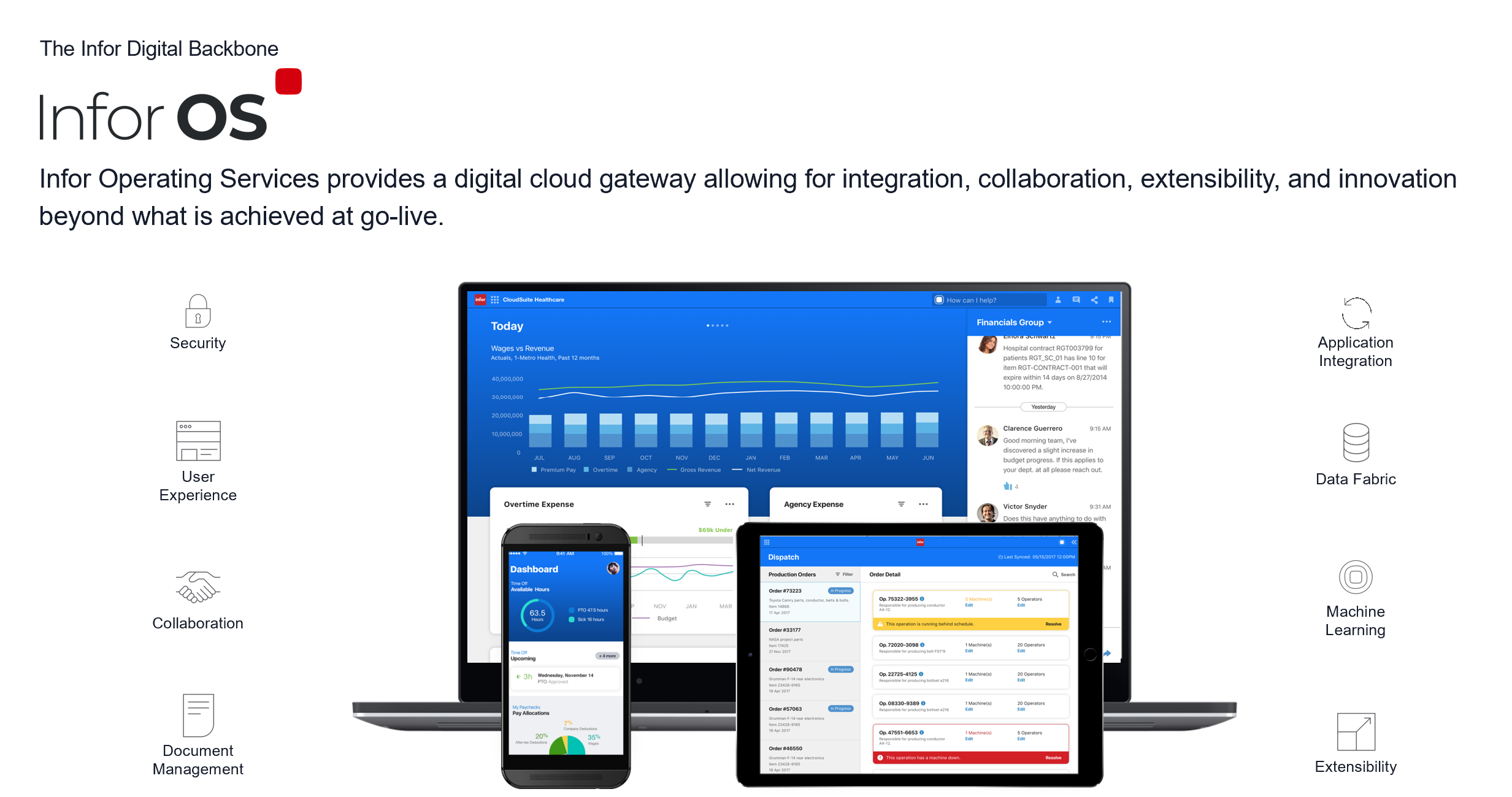
There’s a moment in most finance and operations teams when everyone realizes they’re working hard, but not necessarily working together. The ERP team has one view of the business. Finance has another. Reporting exists, but trust in the numbers is shaky. Meetings spend more time debating sources than decisions. That’s usually when Infor OS and OneStream (CPM) enter the same conversation.
Not because they’re competing platforms, and not because someone wants another tool. They come up because organizations reach a point where moving data around isn’t enough anymore. They need structure. They need context. And they need to stop rebuilding the same logic in five different places.
The Problem Isn’t Data. It’s Disconnection.
Most modern organizations don’t lack data. They’re drowning in it. ERP systems, supply chain tools, CRM platforms, spreadsheets, and external feeds all produce numbers. The problem is that each system speaks its own language.
Infor OS exists to address that reality. It doesn’t replace transactional systems. It sits above them and between them. Its real value isn’t dashboards or buzzwords. It’s the discipline it introduces around how data is integrated, governed, and shared.
Infor OS gives IT and business teams a way to agree on definitions once and reuse them everywhere. That sounds simple, but anyone who’s reconciled reports across systems knows how rare that discipline actually is.
Why Infor OS Matters to Finance (Even If Finance Didn’t Ask for It)
Infor OS often starts as an IT or operations initiative. Finance benefits later — sometimes without realizing it.
Operational data becomes cleaner. Timeliness improves. Context travels with the numbers. When finance finally pulls that data into planning or reporting, it arrives with fewer assumptions baked in.
That’s when finance teams start paying attention.
Instead of asking, Where did this number come from? they start asking, What does this trend mean? That shift alone changes the tone of financial discussions.
Where OneStream (CPM) Fits — and Why It’s a Different Discipline
OneStream (CPM) doesn’t try to solve integration problems. It assumes data will arrive ready to be used. Its job is to manage financial complexity once that data is trusted.
Finance teams adopt OneStream (CPM) when planning, consolidation, and reporting become too fragmented to manage. Too many spreadsheets. Too many versions. Too many late-night reconciliations before board meetings.
What makes OneStream (CPM) practical is its single, unified model. Planning, actuals, forecasts, consolidations, and reporting all operate within the same framework. Adjustments don’t disappear. Assumptions are visible. Changes can be traced.
That level of discipline matters when numbers drive real decisions.
How Infor OS and OneStream (CPM) Actually Work Together
Infor OS handles the messy upstream reality. Different systems. Different formats. Different update cycles. It standardizes, enriches, and delivers data in a controlled way.
OneStream (CPM) takes that structured data and applies financial logic to it. Consolidation rules. Forecast models. Scenario assumptions. Performance metrics.
The boundary between them is important. Infor OS doesn’t decide financial outcomes. OneStream (CPM) doesn’t manage operational workflows. Each stays in its lane.
That separation keeps systems stable and teams sane.
A Grounded Example: Operations Feeding Financial Reality
Imagine a multi-site organization running complex operations. Production data, inventory movement, and supplier performance are captured daily. Infor OS aggregates that information, aligns definitions, and ensures it’s available consistently.
OneStream (CPM) then uses that data for planning and forecasting. Changes in production volumes affect revenue projections. Inventory shifts impact working capital forecasts. Supplier delays show up as margin risk scenarios.
Without Infor OS, finance would rely on delayed extracts or manually cleaned files. Without OneStream (CPM), those insights would sit outside formal planning cycles.
Together, they connect operational reality to financial consequence.
Why This Combination Reduces Friction in Finance Conversations
Anyone who’s presented numbers to senior leadership knows the drill. The first ten minutes are spent validating sources. Confidence erodes quickly if answers aren’t immediate.
Infor OS reduces that friction by providing a consistent data foundation. OneStream (CPM) reinforces it with transparency around adjustments and assumptions.
When both are in place, finance spends less time defending numbers and more time explaining implications. That’s not a small change. It’s the difference between reporting and advising.
Reporting That Reflects How People Think
Infor OS supports real-time operational insight. Dashboards, alerts, and analytics help teams respond quickly to what’s happening now.
OneStream (CPM) supports reflection and projection. Variance analysis explains what changed. Forecasts explore what might happen next. Scenarios test decisions before they’re made.
When these layers are aligned, reporting feels coherent instead of fragmented. People stop asking for “one more version” because the logic is consistent.
Governance Without Creating Bottlenecks
Governance gets a bad reputation because it’s often implemented poorly. Too centralized. Too slow. Too rigid.
Infor OS and OneStream (CPM) distribute governance logically. Infor OS governs data movement and access. OneStream (CPM) governs financial models and reporting structures.
Each platform enforces rules where they make sense. IT doesn’t dictate financial logic. Finance doesn’t manage integration pipelines. That balance keeps governance effective without suffocating the business.
Scaling Without Rebuilding Everything
Growth exposes weak architecture fast. New regions. New systems. New reporting requirements.
Infor OS scales by absorbing new data sources without rewriting existing logic. OneStream (CPM) scales by extending planning and consolidation across entities, currencies, and reporting standards.
Organizations that design with this separation early avoid constant re-implementation later. Systems evolve instead of being replaced.
What Experience Teaches Over Time
Teams that succeed with Infor OS treat it as a long-term data foundation, not a quick integration fix. They invest in definitions, ownership, and governance upfront.
Teams that succeed with OneStream (CPM) resist the urge to overload it. They keep operational transformations outside and focus the platform on financial insight.
That discipline doesn’t come from software. It comes from experience.
Deciding If This Architecture Makes Sense
Not every organization needs both platforms immediately. Simpler environments may cope with lighter solutions for years.
The tipping point usually comes when leadership wants faster answers without sacrificing trust. When finance needs to connect operational drivers to financial outcomes reliably.
That’s when Infor OS and OneStream (CPM) stop feeling like optional tools and start feeling like infrastructure.
A Final Thought from the Field
Technology doesn’t align organizations. Clear boundaries do.
Infor OS brings order to data chaos. OneStream (CPM) brings structure to financial complexity. When they work together, conversations change. Decisions improve. And finance gains a seat at the table that isn’t based on reporting alone, but on insight people believe.


Easy tips and tricks to clean your sofa at home
The sofa is the center of your living space. Your sofa is a place where you can relax, ent…
Entertainment Online with Positive Play
G28 proudly stands as a leading and reputable digital entertainment platform that represents quality, …