Key Features to Look for in a Recruitment Management System
Key Features to Look for in a Recruitment Management System

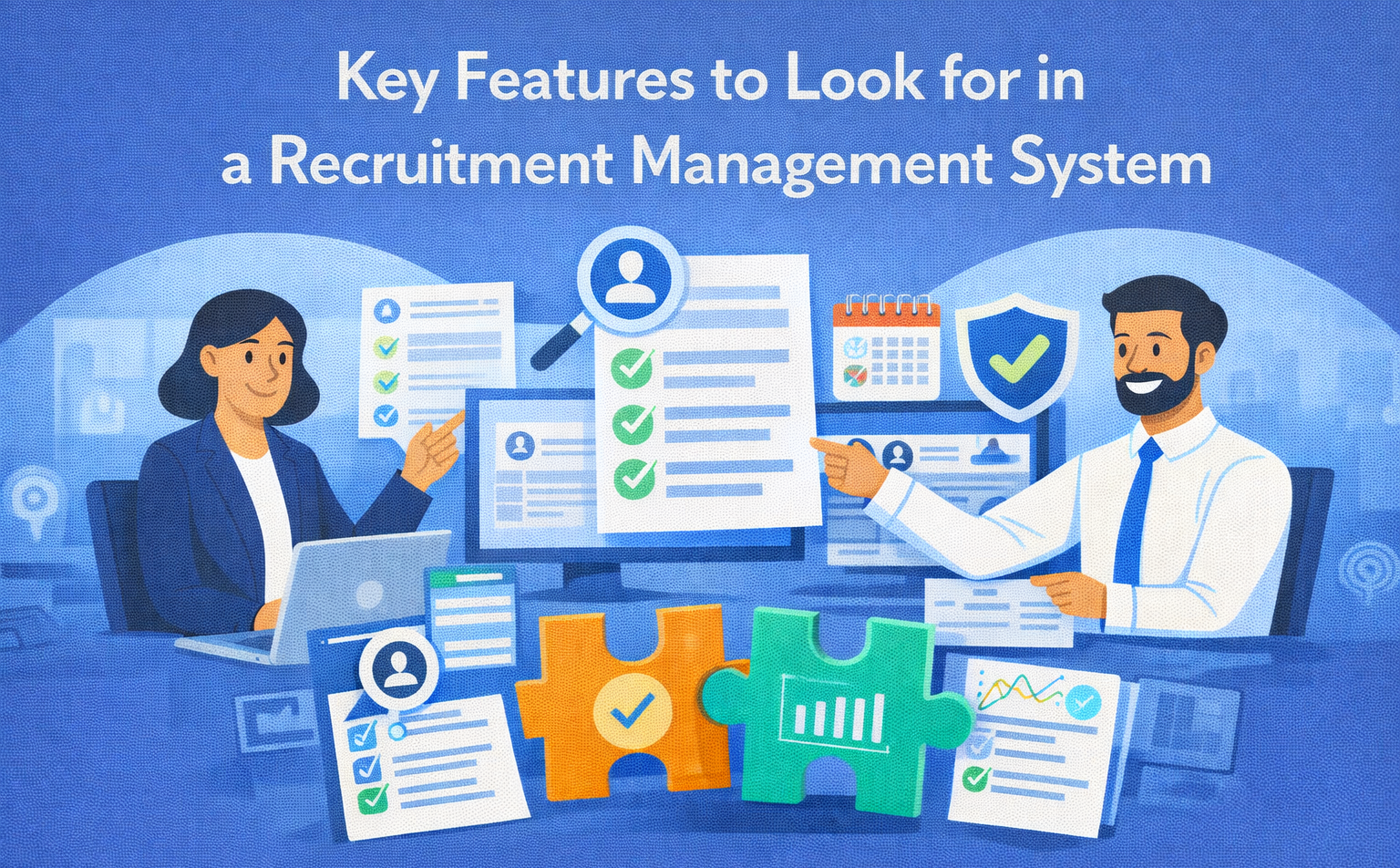
Hiring the right talent efficiently has become critical for modern businesses. With growing competition and evolving candidate expectations, manual recruitment methods can no longer deliver speed or accuracy. A Recruitment Management System (RMS) helps organisations streamline hiring, improve candidate quality, and reduce time-to-hire.
However, choosing the right system requires understanding the features that truly matter. Below are the key features to look for in a Recruitment Management System that supports scalable and effective hiring.
Centralised Candidate Database
An RMS should provide a single platform to store and manage all candidate information. This includes resumes, contact details, interview notes, and application history. A centralised database allows recruiters to quickly search and reuse profiles for future openings, reducing sourcing time.
Automated Job Posting
A good recruitment management system enables recruiters to post job openings across multiple platforms from one dashboard. This includes the company career page, job portals, and social media platforms. Automation ensures wider reach while maintaining consistency in job descriptions.
Resume Parsing and Smart Screening
Resume parsing helps convert unstructured resumes into structured candidate profiles automatically. Smart screening features filter applications based on predefined criteria such as skills, experience, and qualifications, allowing recruiters to focus only on relevant candidates.
Candidate Tracking and Pipeline Visibility
Candidate tracking provides real-time visibility into every stage of the hiring process. Recruiters can easily see where each candidate stands, from application to final selection. This transparency helps identify bottlenecks and ensures timely follow-ups.
Interview Scheduling and Calendar Integration
Interview scheduling should be quick and seamless. An effective RMS integrates with calendars to schedule interviews, send automated reminders, and avoid conflicts. This reduces coordination efforts and speeds up the hiring cycle.
Collaboration and Feedback Management
Recruitment involves multiple stakeholders. A recruitment management system should support collaboration by allowing recruiters and hiring managers to share feedback, rate candidates, and leave comments within the platform. This ensures aligned decision-making.
Also Read: When Should Full and Final Settlement Be Paid After Resignation?
Candidate Communication and Engagement
Clear and timely communication enhances candidate experience. Built-in email or messaging features allow recruiters to send acknowledgements, interview updates, and offer letters without manual follow-ups, keeping candidates informed at every stage.
Customisable Hiring Workflows
Every organisation follows a unique hiring process. An RMS should allow customisation of recruitment stages, approval flows, and evaluation criteria to match internal hiring policies and business requirements.
Recruitment Analytics and Reporting
Data insights are essential for improving recruitment outcomes. A strong RMS provides reports on time-to-hire, source effectiveness, candidate conversion rates, and recruiter performance, helping HR teams make data-driven decisions.
Integration with HRMS and Payroll Systems
Recruitment should seamlessly transition into onboarding. Integration with HRMS and payroll systems ensures that selected candidates are smoothly converted into employees without duplicate data entry.
Mobile Accessibility
Mobile access allows recruiters and hiring managers to review resumes, approve candidates, and provide feedback on the go. This flexibility helps speed up hiring decisions, especially in fast-paced environments.
Data Security and Compliance
Since recruitment systems handle sensitive personal data, robust security features such as role-based access, data encryption, and compliance with labour and data protection regulations are essential.
Candidate Self-Service Portal
A self-service portal allows candidates to apply, upload documents, track application status, and communicate with recruiters. This improves transparency and enhances the overall candidate experience.
AI-Powered Hiring Insights
Advanced recruitment management systems leverage AI to recommend suitable candidates, predict hiring success, and reduce unconscious bias. These features help organisations build stronger and more future-ready teams.
Conclusion
Selecting the right Recruitment Management System plays a vital role in building an efficient and scalable hiring process. By focusing on features that improve automation, collaboration, and candidate experience, organisations can make smarter hiring decisions and gain a competitive advantage in talent acquisition.


Easy tips and tricks to clean your sofa at home
The sofa is the center of your living space. Your sofa is a place where you can relax, ent…
Entertainment Online with Positive Play
G28 proudly stands as a leading and reputable digital entertainment platform that represents quality, …