Metal Composite Material Advances in Lightweight Engineering Applications

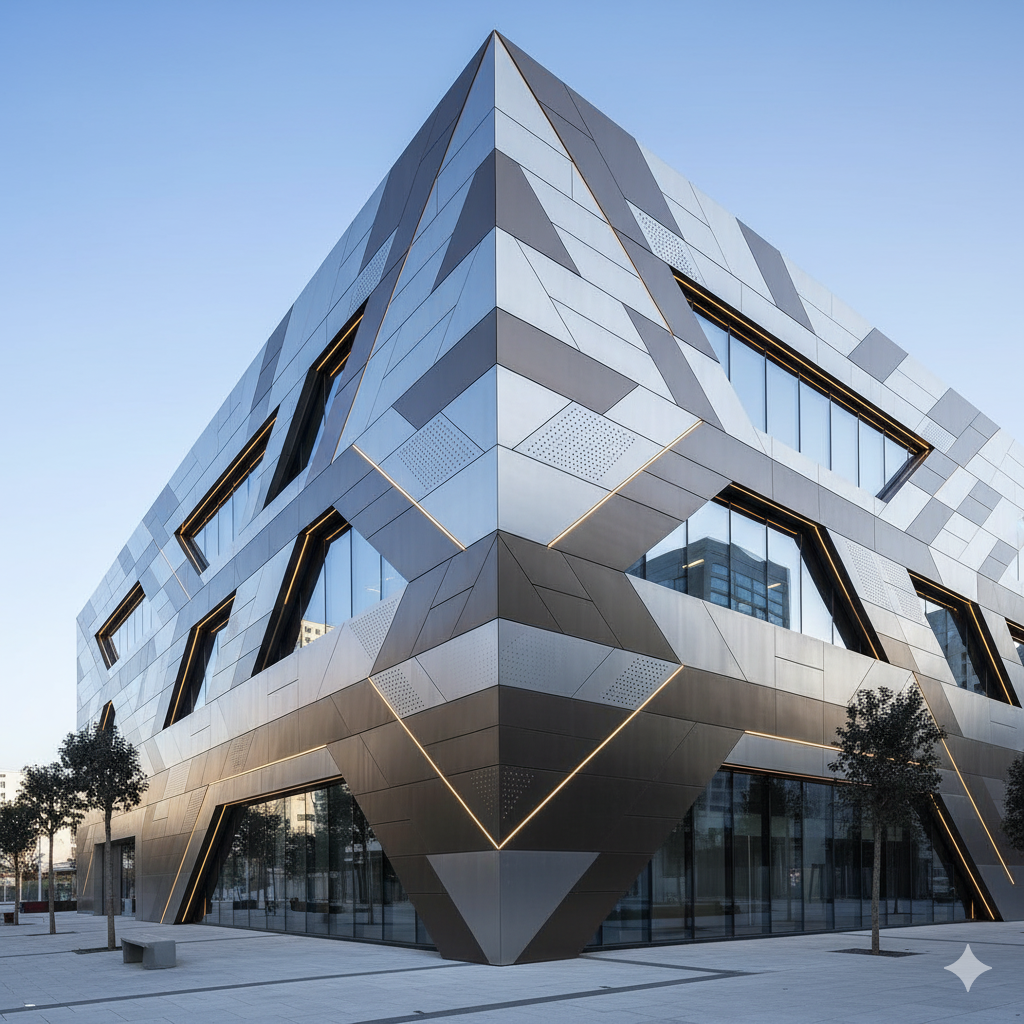
Metal composite material (MCM) consists of metal skins bonded to a solid core, often plastic, creating panels used for building exteriors and industrial applications. It combines the strength and durability of metal with the lightweight and design versatility of composite cores, making it valuable in construction and manufacturing.
These materials offer enhanced properties such as improved strength, corrosion resistance, and weight reduction compared to traditional metals. They are widely used across industries like aerospace, automotive, and architecture where performance and aesthetics are important.
Metal composite materials continue to evolve with advanced coatings and new metal options, expanding their potential. Understanding their composition and benefits helps in selecting the right solution for specific engineering and design challenges.
Understanding Metal Composite Material
Metal composite materials combine multiple components to achieve enhanced strength, reduced weight, and improved durability. They are engineered to meet precise performance criteria across various industries by leveraging unique structural designs and material properties.
Definition and Basic Structure
Metal composite materials (MCMs) consist of two or more distinct components where metal layers are bonded to a core material to create a panel. Typically, factory-manufactured MCM panels include metal skins attached to both faces of a solid plastic core, producing a lightweight yet stiff product.
This core is often made from polyethylene or mineral-filled materials, offering structural support and impact resistance. The external metal layers provide strength, corrosion resistance, and aesthetic appeal. This layered design allows for customization, optimizing properties such as rigidity, thermal behavior, and weight according to application needs.
Types of Metal Composite Materials
Several types of MCMs exist based on core material and metal skins. The most common include:
- Aluminum Composite Panels (ACP): Aluminum skins with polyethylene or mineral cores, widely used for cladding.
- Metal Matrix Composites (MMC): Metals reinforced with ceramics or fibers to improve mechanical properties.
- Copper Composite Panels: Less common, focused on electrical conductivity and corrosion resistance.
Each type is selected for its specific advantages, such as lightweight construction or high wear resistance, depending on the industry requirements. Composite panels with mineral cores offer better fire retardancy compared to polymer cores.
Key Properties and Performance
Metal composites offer a balance of strength, stiffness, and reduced weight. They provide superior wear resistance, thermal stability, and corrosion protection compared to standard metals.
Key performance aspects include:
- Strength-to-weight ratio: Enhanced compared to pure metals.
- Thermal expansion: Lower and more controlled than monolithic metals.
- Durability: Resistant to impacts and environmental exposure.
- Workability: Easily shaped and fabricated for complex designs.
These properties make MCMs ideal for applications where both mechanical performance and lightweight characteristics are critical.
Common Applications
Metal composite materials are employed in various fields due to their versatile properties. They are particularly prevalent in:
- Aerospace: Structural components benefitting from weight reduction without sacrificing strength.
- Automotive: Panels and interior parts that improve fuel efficiency.
- Construction: Exterior cladding with attractive finishes combined with durability.
- Electronics: Casings and heat sinks using metal-ceramic composites for thermal management.
- Defense and Biomedical: Parts requiring specific mechanical and chemical resistance.
This broad adoption results from the ability of metal composites to meet demanding specifications across industries efficiently.
Manufacturing and Advancements
Metal matrix composites (MMCs) are produced using various techniques that balance precision, scalability, and material performance. Recent developments focus on novel fabrication methods and innovations that improve mechanical properties while addressing environmental concerns.
Fabrication Processes
Common MMC fabrication methods include stir casting, powder metallurgy, and infiltration. Stir casting mixes reinforcement particles into molten metal, offering cost-effectiveness and suitability for large-scale production. However, achieving uniform distribution remains a challenge.
Powder metallurgy involves blending metal powders with reinforcements, followed by compaction and sintering. It provides better control over microstructure and results in improved mechanical properties but is more expensive.
Additive manufacturing (AM) is gaining traction for MMCs, allowing complex shapes and tailored material properties through layer-by-layer deposition. Techniques like laser-directed energy deposition (L-DED) enable rapid alloy and composite production with reduced trial costs.
Recent Innovations
Advances in MMCs are focused on enhancing strength-to-weight ratios, wear resistance, and thermal stability. New matrix materials and reinforcements, including nano-sized particles, improve toughness and reduce defects.
Additive manufacturing innovations foster localized production and structural optimization. Collaborative digital platforms enable design customization and quicker prototyping, accelerating product development.
Functionally graded MMCs are emerging, where reinforcement concentration varies within a component. This allows specific property tuning, improving performance under different stress or thermal conditions.
| Innovation | Benefit | Application |
| Nano-reinforcements | Enhanced toughness and strength | Aerospace, automotive |
| Additive manufacturing | Complex shapes, on-demand manufacturing | Prototyping, small-batch production |
| Functionally graded MMCs | Tailored mechanical properties | High-performance components |
Sustainability and Environmental Impact
MMCs contribute to lightweighting, which reduces fuel consumption and emissions in transportation. Ongoing research aims to develop eco-friendly matrices and reinforcements, including bio-based alternatives.
Additive manufacturing reduces material waste compared to traditional subtractive methods. This efficiency supports sustainable production by lowering raw material usage and energy consumption.
Recycling of MMCs remains challenging due to mixed materials. Efforts are focused on improving recyclability through design and material selection to minimize environmental impact over the product lifecycle.


Easy tips and tricks to clean your sofa at home
The sofa is the center of your living space. Your sofa is a place where you can relax, ent…
Entertainment Online with Positive Play
G28 proudly stands as a leading and reputable digital entertainment platform that represents quality, …