Metal Seated Ball Valves for Cryogenic & High-Temperature Applications
A reliable valve solution engineered for extreme low and high temperature industrial services.

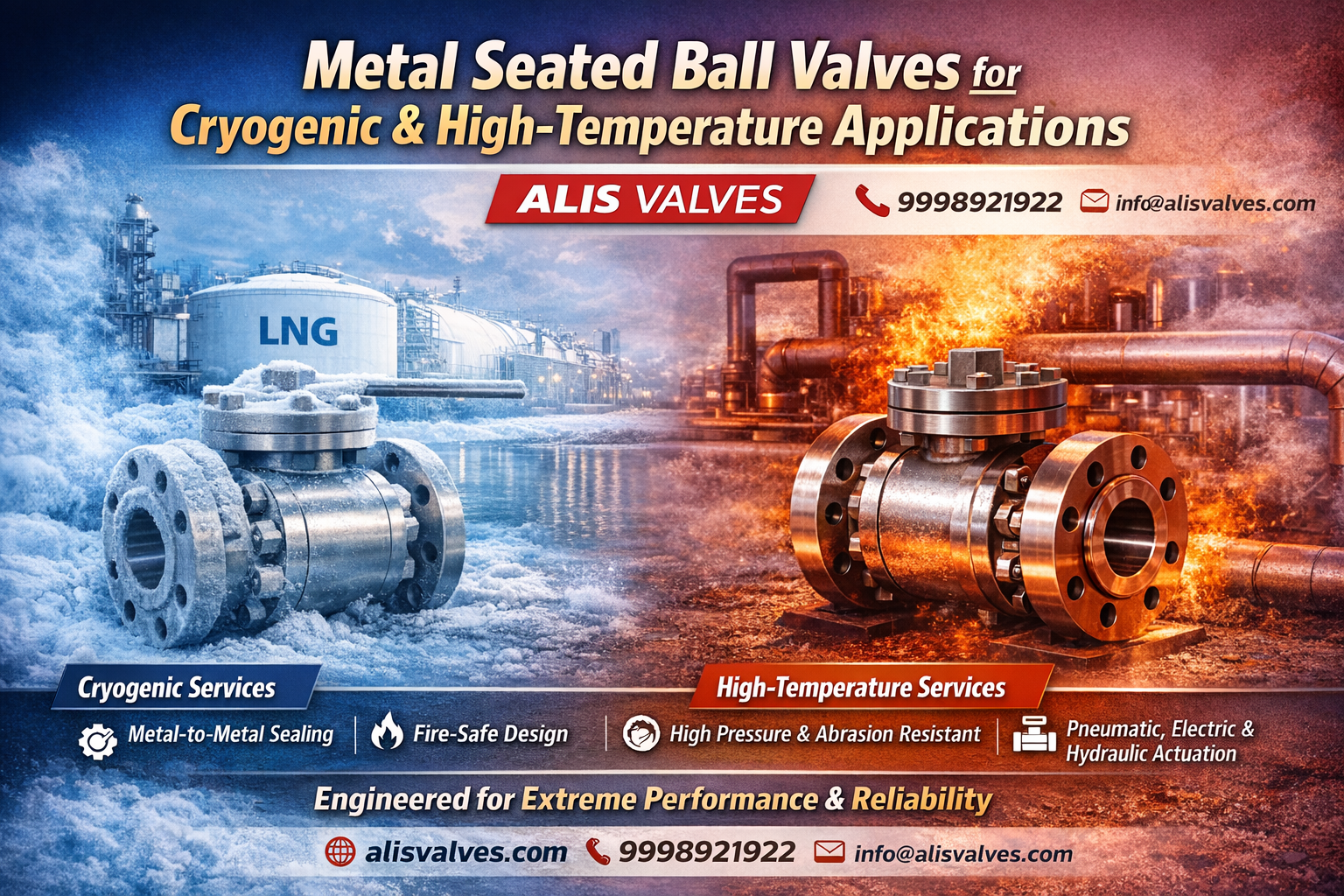
Metal seated ball valves are specifically engineered for industrial applications where operating temperatures fall far below freezing or rise well beyond the limits of conventional soft-seated valves. In cryogenic services such as LNG, liquid nitrogen, and liquid oxygen, and in high-temperature services like thermal oil, steam, and hot hydrocarbons, valve reliability is critical. Metal seated ball valves provide consistent sealing, structural stability, and long service life under these extreme conditions.
Challenges in Cryogenic and High-Temperature Valve Applications
Extreme temperature environments create serious challenges for valve performance. In cryogenic conditions, materials can become brittle, contract rapidly, and lose sealing effectiveness. Elastomers and soft seats often harden or crack, causing leakage. In high-temperature services, soft seats can deform, burn, or chemically degrade, leading to loss of shutoff and safety risks.
Valves used in such conditions must tolerate thermal shock, repeated temperature cycling, and large temperature gradients without compromising sealing or mechanical strength.
Why Metal Seated Ball Valves Are Suitable for Extreme Temperatures
Metal seated ball valves use metal-to-metal contact between the ball and seat, eliminating reliance on polymers that are vulnerable to temperature extremes. Precision machining and advanced surface coatings allow these valves to maintain sealing integrity across a wide temperature range.
Key advantages include stable sealing surfaces, resistance to thermal deformation, and the ability to handle both very low and very high temperatures without loss of performance.
Performance of Metal Seated Ball Valves in Cryogenic Applications
Cryogenic applications typically operate at temperatures as low as –196°C. At such low temperatures, material selection and valve design become critical. Metal seated ball valves for cryogenic service are designed to accommodate thermal contraction and maintain tight shutoff.
Extended bonnets are commonly used to move stem seals away from the cold zone, reducing the risk of leakage and seal failure. Materials chosen for cryogenic valves maintain toughness and ductility even at extremely low temperatures, preventing cracking or brittle fracture.
Metal seated designs ensure consistent sealing even after repeated cool-down and warm-up cycles, making them reliable for LNG terminals, gas processing plants, and air separation units.
High-Temperature Capabilities of Metal Seated Ball Valves
High-temperature industrial processes often exceed 400°C, well beyond the limits of PTFE or elastomer-seated valves. Metal seated ball valves are ideal for these services because they contain no soft materials that can degrade under heat.
In high-temperature applications, these valves maintain structural integrity, resist oxidation, and provide dependable isolation. They are commonly used in thermal oil systems, power plant steam lines, refinery hot hydrocarbon services, and steel plant processes.
The ability to withstand thermal shock and continuous exposure to high heat makes metal seated ball valves a preferred choice for severe service isolation.
Material Selection for Cryogenic and High-Temperature Services
Material selection plays a vital role in valve performance at extreme temperatures. For cryogenic services, materials must retain strength and toughness at low temperatures. Certain stainless steels and alloy steels are widely used due to their proven cryogenic properties.
For high-temperature services, materials must resist creep, scaling, and thermal fatigue. Alloy steels and high-temperature stainless steels are commonly selected to ensure long-term stability.
Ball and seat surfaces are typically hard-faced with coatings such as tungsten carbide, chromium carbide, or stellite. These coatings improve wear resistance and maintain sealing performance despite thermal cycling.
Sealing Reliability and Leakage Control
Leakage in cryogenic or high-temperature systems can lead to serious safety hazards, including fire, explosion, or product loss. Metal seated ball valves provide reliable shutoff due to precision-engineered metal seating surfaces.
In cryogenic services, tight sealing prevents vapor leaks and ice formation around valve components. In high-temperature services, metal-to-metal seating ensures sealing integrity even when exposed to extreme heat.
Many metal seated ball valves are also designed to meet fire-safe requirements, providing additional protection in hazardous environments.
Automation and Torque Considerations
Metal seated ball valves generally require higher operating torque compared to soft-seated designs. This is due to metal-to-metal contact between sealing surfaces. However, modern valve designs optimize seat geometry and surface finish to reduce friction and operating effort.
These valves are commonly automated using pneumatic, electric, or hydraulic actuators. Correct torque calculation and actuator selection are essential to ensure smooth operation, especially in extreme temperature applications.
Automation improves safety and process control in both cryogenic and high-temperature systems.
Industries Using Metal Seated Ball Valves at Extreme Temperatures
Metal seated ball valves are widely used across industries that operate under extreme thermal conditions. Common applications include LNG processing and storage facilities, air separation plants, power generation units, refineries, petrochemical complexes, steel plants, and chemical processing facilities.
Their ability to perform reliably in both cryogenic and high-temperature environments makes them a versatile solution for critical industrial services.
Maintenance and Lifecycle Advantages
Although metal seated ball valves typically have a higher initial cost, they offer significant long-term benefits. Reduced maintenance requirements, fewer unexpected failures, and longer service life result in lower overall operating costs.
In extreme temperature applications where downtime is expensive, metal seated ball valves provide dependable performance and improved plant reliability.
Key Selection Criteria for Extreme Temperature Applications
Selecting the right metal seated ball valve requires careful evaluation of operating temperature range, pressure rating, process media, cycling frequency, and safety requirements. Proper selection ensures optimal performance, safety, and long service life.
Working with an experienced valve manufacturer helps ensure that the valve design and materials are correctly matched to the application.
Conclusion
Metal seated ball valves are a proven and reliable solution for both cryogenic and high-temperature applications. Their robust construction, metal-to-metal sealing, and resistance to extreme thermal conditions make them indispensable in severe service environments.
For industries operating at temperature extremes, metal seated ball valves deliver safety, durability, and long-term performance that conventional valve designs cannot match.


Easy tips and tricks to clean your sofa at home
The sofa is the center of your living space. Your sofa is a place where you can relax, ent…
Entertainment Online with Positive Play
G28 proudly stands as a leading and reputable digital entertainment platform that represents quality, …